mob-menu
Back
Calander IconDecember 16,2025 Author IconHiba Dahche

The Foundations of Self-Regulation in Early Years Education: A Comprehensive Guide Inspired by Dr. Stuart Shanker

Your Partner in Early Childhood Education

We’re Parent, the early childhood platform that supports educators, families, and children. Want to learn more about how we can help your setting? Book a free, no-obligation chat with us.

Looking for more activity ideas or professional development? Take a look at our free webinars and practical resources for educators.

Enjoyed this resource? Sign up for our newsletter to get more like it straight to your inbox.


Introduction: The Vital Role of Self-Regulation in Early Childhood

In early years classrooms, we often hear educators say:

  • “He can’t sit still.”
  • “She gets frustrated so quickly.”
  • “He keeps hitting when he’s overwhelmed.”
  • “She shuts down when things get too hard.”

These behaviours are common in young children but they are not signs of “bad behaviour,” stubbornness, or lack of discipline. They are signs of stress.

Dr. Stuart Shanker, a world-leading expert in self-regulation, explains that:

“There is no such thing as a bad kid. There are only kids who are overstressed.” Stuart Shanker

This statement changes everything.

Instead of asking, “How do I fix this behaviour?”
we ask, “What is the stress behind this behaviour?”

Self-regulation is not about compliance or “calming down quickly.” It is a lifelong process in which children learn to:

  • recognize stress
  • reduce stress
  • recover from stress
  • build resilience
  • restore energy
  • understand emotions
  • manage impulses
  • find balance


We will explore:

  • what self-regulation truly is
  • what it is not
  • the science behind it
  • its importance in Canadian early years contexts
  • Shanker’s 5 step Self-Reg model
  • stressors in the 5 domains
  • strategies that work in real early years classrooms
  • educator mindsets and environmental design
  • how to support multilingual learners, neurodivergent children, and children with trauma
  • how to build a culture of co-regulation
  • and practical tools to begin implementing Self-Reg today


 What Is Self-Regulation?

According to Dr. Stuart Shanker:

“Self-Reg is about understanding and responding to stress, not controlling behaviour.” Stuart Shanker

Self-regulation is not simply “self-control.”
It is not about:

✘ willpower
✘ obedience
✘ compliance
✘ discipline
✘ punishments or rewards
✘ sitting still
✘ being quiet

Self-regulation is a brain body process.

It involves:

  • recognizing what is happening inside our bodies
  • understanding why we feel or act a certain way
  • reducing the stress that overwhelms us
  • restoring our energy
  • and then responding in a balanced way

Shanker explains:

“Self-control is about inhibiting impulses. Self-regulation is about reducing the stress that is driving those impulses.” Stuart Shanker

This means that the real goal is not “calm behaviour.”
The real goal is reduced stress.

Because when stress drops, behaviour naturally improves.

Why Self-Regulation Matters in Early Years Education

Young children are experiencing rapid brain development. Neural pathways related to emotion regulation, impulse control, decision making, empathy, and coping skills are forming during this period.

Self-regulation supports:

✔ Emotional development

Children learn to name and manage feelings.

✔ Social development

Children learn how to resolve conflicts, cooperate, and play peacefully.

✔ Cognitive development

A regulated brain is ready for learning. Dysregulated brains cannot engage in problem-solving or executive functioning.

✔ Behavioural development

Challenging behaviours decrease naturally when stress is reduced.

✔ Resilience

Children learn how to bounce back from challenges.

Shanker emphasizes:

“Self-Reg is fundamentally about building a brain that is resilient.” Stuart Shanker

In a world where children face increasing sensory, social, digital, academic, and emotional stressors, self-regulation has never been more essential.

The Science of Stress in Young Children

Stress is not only emotional. Stress is any demand placed on the body or mind.

Shanker identifies five domains of stress that impact children:

  • 1. Biological
  • 2. Emotional
  • 3. Cognitive
  • 4. Social
  • 5. Prosocial

Understanding these domains helps educators identify hidden stressors.

1. Biological Stressors

  • hunger
  • fatigue
  • overheating or feeling cold
  • loud noise
  • bright lights
  • strong smells
  • scratchy clothing
  • transitions
  • sensory sensitivities
  • illness

2. Emotional Stressors

  • disappointment
  • frustration
  • excitement
  • fear
  • separation anxiety
  • overstimulation

3. Cognitive Stressors

  • difficulty understanding instructions
  • complex tasks
  • too many choices
  • pressure to “perform”
  • rushing
  • new environments

4. Social Stressors

  • group dynamics
  • taking turns
  • conflict
  • unfamiliar peers
  • misreading facial expressions
  • separation from a friend

5. Prosocial Stressors

  • worrying about others
  • trying to help a friend
  • wanting to please the teacher
  • absorbing the emotions of the room

Young children experience all of these daily.

Shanker's model is the foundation of modern self-regulation practice.

stress piles up, children move into:

  • fight
  • flight
  • freeze

This is where behaviours like:

  • hitting
  • crying
  • running away
  • hiding
  • refusing
  • tantrums
  • shutting down

begin to appear.

Self-regulation helps prevent and recover from these states.

Shanker’s 5-Step Self-Reg Framework

STEP 1: Reframe the Behaviour

Instead of:
“She’s being difficult.”
“He’s misbehaving.”

Try:
“This child is in stress.”

Shanker reminds educators:

“See the behaviour as a sign of stress, not misbehaviour.” — Stuart Shanker

This step alone transforms your approach.

STEP 2: Recognize the Stressors

Look deeper and identify stress across the five domains.

Example: A child hitting during circle time might be:

  • hungry (biological)
  • overwhelmed by noise (biological)
  • confused by the activity (cognitive)
  • upset by a previous conflict (social)
  • sensing tension in the room (prosocial)

STEP 3: Reduce the Stressors

Adjust the environment and routines:

  • soften lighting
  • reduce noise
  • provide predictable schedules
  • offer calm-down spaces
  • shorten group times
  • give sensory tools
  • simplify instructions


STEP 4: Reflect Build Awareness

Teach the child to notice their own feelings:

  • “Is your body fast or slow right now?”
  • “Your face looks worried. Do you feel unsure?”
  • “Is your tummy tight? Maybe we need a break.”

Reflection builds metacognition, the foundation of emotional intelligence.

STEP 5: Restore Replenish Energy

Help children find strategies that bring them back to balance:

  • movement
  • breathing
  • quiet time
  • art
  • loose parts
  • water play
  • nature
  • hugs or connection
  • sensory bins
  • soft music

Shanker explains:

“Restoration is not a reward. It is what the brain needs to get back to being calm and alert.” Stuart Shanker

Practical Self-Reg Strategies for Early Years Classrooms

Below are evidence-based strategies aligned with Shanker’s self-regulation principles.

1. Environmental Design

The environment is the “third teacher.”
A poorly designed room increases stress.

Create:

  • soft lighting (avoid harsh fluorescents)
  • predictable, visible schedules
  • quiet corners
  • labeled centres
  • natural colours + textures
  • movement pathways
  • cozy reading nooks

Avoid:

  • clutter
  • overly bright rooms
  • too many posters
  • loud music
  • frequent transitions
  • chaotic traffic flow

Shanker emphasizes:

“Children’s behaviour is often a reflection of the energy in the room.” — Stuart Shanker

2. Co-Regulation: The Adult as Calm Anchor

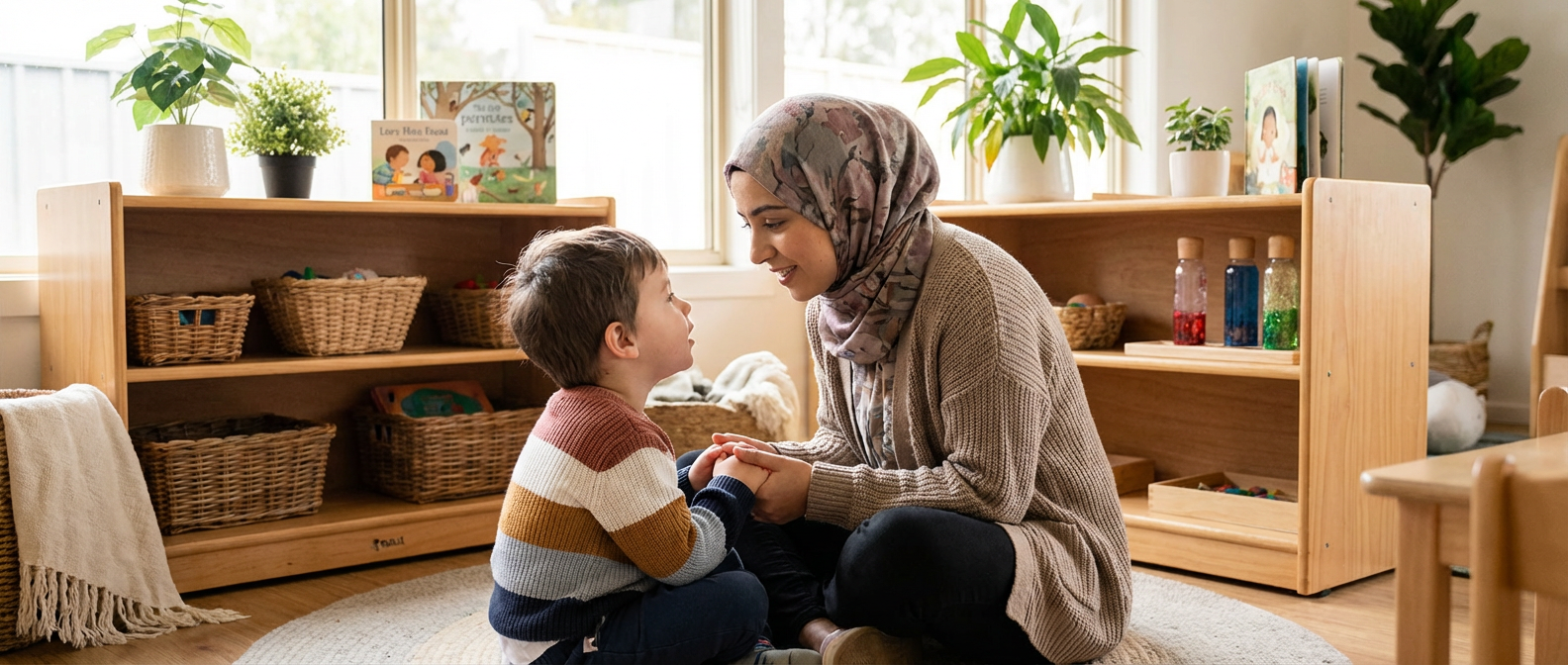
Co-regulation is when the adult provides the calm the child cannot yet access.

  • gentle tone
  • soft facial expressions
  • predictable responses
  • slow movements
  • being physically present
  • narrating emotions

Children take in adult regulation through the nervous system.

A dysregulated adult cannot regulate children.

3. Connection Before Correction

Always connect emotionally before giving directions.

  • “I can see you’re upset.”
  • “I’m here. You’re safe.”
  • “Let’s figure this out together.”

Connection reduces stress instantly.


4. Predictable Routines

Young children need security.

Predictable routines reduce cognitive and emotional stress.

Use:

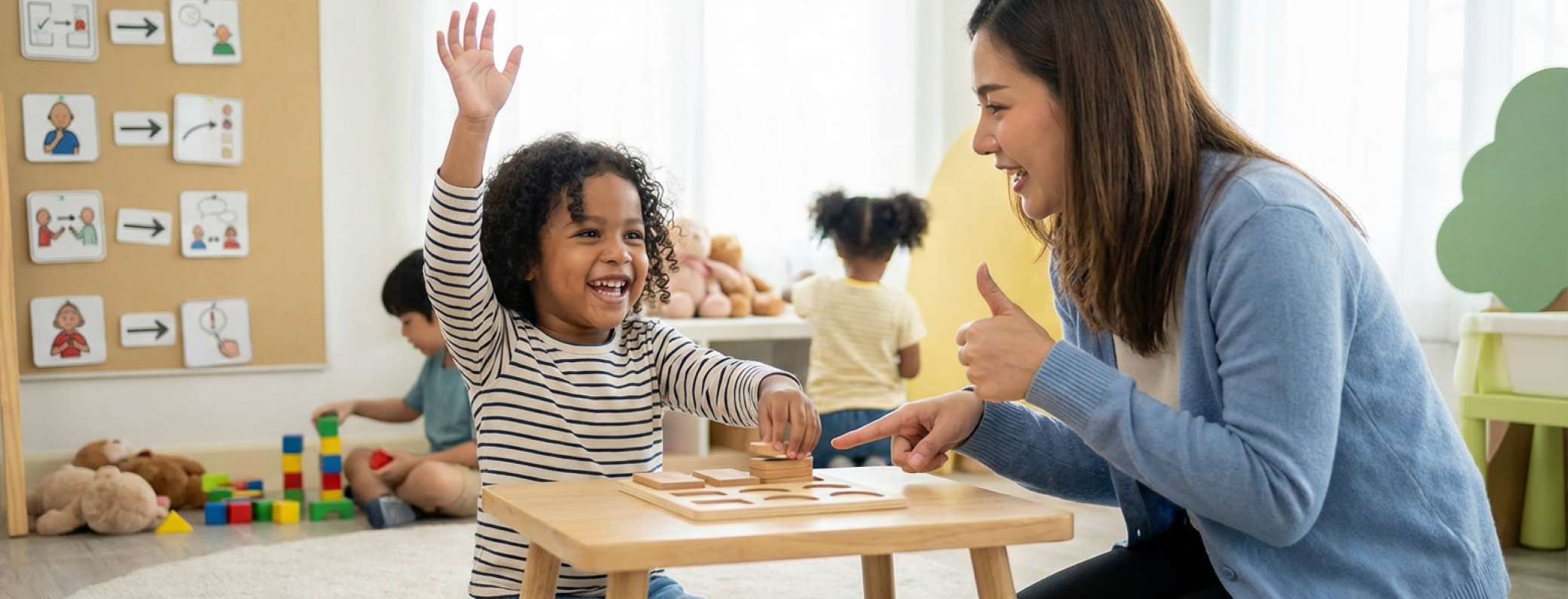
  • visual schedules
  • timers for transitions
  • songs
  • consistent expectations
  • transition objects

5. Loose Parts for Self-Regulation

Loose parts support emotional regulation through:

  • sensory engagement
  • imagination
  • soothing repetition
  • fine motor focus
  • agency and control

Loose parts can be used in:

6. Sensory Regulation Tools

Offer:

  • stress balls
  • putty
  • finger tracing boards
  • fabric squares
  • weighted objects
  • fidget items
  • lavender playdough
  • water drippers

These support children whose nervous systems need tactile grounding.

7. Breathing Techniques for Children

Use simple breathing strategies:

  • balloon breathing
  • star breathing
  • “smell the flower, blow the candle”
  • hand tracing breaths

Teach breathing when children are calm, not in crisis.

8. Movement Breaks

Movement resets the nervous system.

Include:

  • animal walks
  • yoga
  • dancing
  • stretching
  • outdoor climbing
  • rolling
  • pushing/pulling activities

9. Emotion Coaching

Help children name emotions.

  • “It looks like you feel frustrated.”
  • “You’re disappointed because your tower fell.”

Shanker highlights:

“When we name the emotion, we help the child’s brain make sense of what they feel.” Stuart Shanker

Naming reduces stress.


10. Calm Down Spaces

A calm corner is not a time out.
It is a place for restoration.

Include:

  • soft pillows
  • weighted blanket
  • picture books
  • sensory bottles
  • mirrors
  • breathing charts
  • soft lighting

This teaches self directed regulation.

Supporting Neurodivergent Children

Children with:

  • Autism
  • ADHD
  • sensory processing differences
  • anxiety
  • developmental delays

may have more sensitive stress systems.

Use:

  • visual supports
  • first/then boards
  • noise-reduction headphones
  • sensory diets
  • reduced group time
  • predictable routines
  • gentle co-regulation
  • outdoor movement
  • extra processing time

Shanker says:

“When we understand a child’s stress system, everything changes.” — Stuart Shanker

Self-Reg is not one size fits all.


Self-Reg for Multilingual Learners (ELL)

Language learners face extra stress:

  • new words
  • new cultural context
  • fear of misunderstanding
  • social pressure
  • sensory overload

Reduce stress through:

  • gestures
  • visual cues
  • modeling
  • peer partners
  • slower speech
  • real objects
  • loose parts for non verbal communication

When children feel safe, language emerges naturally.

Trauma Informed Self-Reg

For children with adverse early experiences, the stress response may activate quickly.

Important practices:

  • stable relationships
  • gentle transitions
  • soft tone of voice
  • visual boundaries
  • predictable routines
  • validating emotions
  • safe spaces
  • outdoor healing
  • choice and autonomy

Trauma is not fixed through discipline but through safety and connection.

Educator Self-Regulation

Educators cannot co-regulate children if they are overwhelmed.

Shanker reminds us:

“Self-Reg begins with the adult. We cannot expect children to be calm when we are not.” Stuart Shanker

Educators should:

  • take breathing breaks
  • reduce their own sensory load
  • seek peer support
  • set boundaries
  • reflect on stressors
  • practice self-compassion

A regulated educator = a regulated classroom.

Building a Self-Reg Culture in Early Years Centres

Steps:

  1. Educator training
  2. Consistent language (“Are you in high energy or low energy?”)
  3. Family involvement
  4. Calm meeting spaces
  5. Supportive policies
  6. Daily movement and rest
  7. Nature-based learning
  8. Class-wide sensory strategies

When the entire centre embraces Self-Reg, behaviour challenges drop dramatically.


Raising a Generation of Calm, Confident, Resilient Children

Self-regulation is not a skill children “magically learn.”
It is built through relationships, environment, and gentle guidance.

Dr. Stuart Shanker’s work teaches us that:

“When we see the child differently, the child begins to see themselves differently.”  Stuart Shanker

Early years educators have the power to shape children’s emotional futures.

By embracing Self-Reg:

  • we reduce stress
  • we build resilience
  • we strengthen relationships
  • we empower children
  • we create calmer classrooms
  • we support mental health
  • we honour children as capable and whole

Self-regulation is more than a strategy.
It is a philosophy, a way of seeing children with empathy and understanding.

And it is one of the greatest gifts we can give them.

Hiba Dahche

is a Registered Early Childhood Educator and former teacher with 17 years of experience, dedicated to elevating early learning. She works with Parent as an Educational Consultant, supporting educator engagement and community development.

Other Articles

Self-Regulation in Early Years
December 16,2025

The Foundations of Self-Regulation in Early Years Education: A Comprehensive Guide Inspired by Dr. Stuart Shanker

Read More
Environment as the Third Teacher in Canadian Centres
December 15,2025

The Environment as the Third Teacher: Transforming Canadian Early Years Centres Through Play, Inquiry, and Intentional Design

Read More
Strengthening Canada’s Early Years Workforce for the Future
December 9,2025

Quality Depends on Educators: Strengthening the Early Years Workforce Across Canada

Read More